 Reviews

 Proudly American

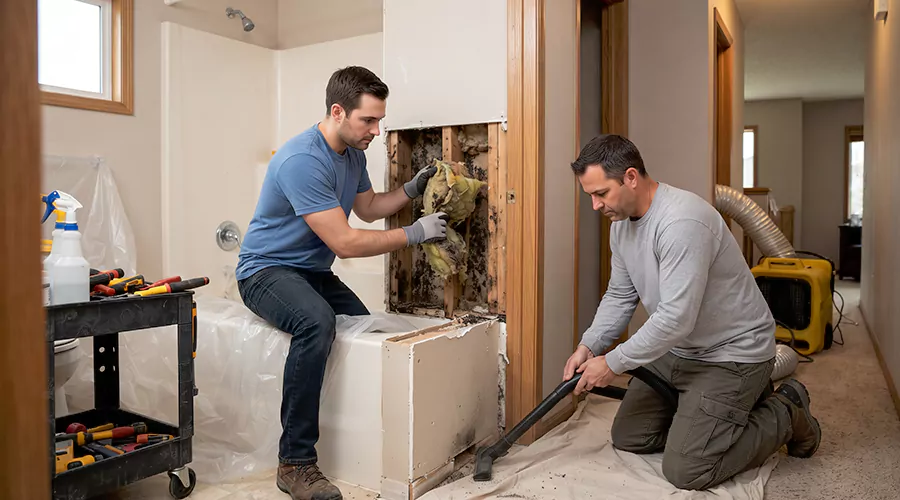
Mold damage restoration typically costs about $1,500 to $6,000 for many residential projects in 2026. Smaller contained problems can cost less, while widespread damage can exceed $6,000 once contaminated materials must be removed and damaged finishes need repair.
What is Included in Mold Damage Restoration Cost?
Mold damage restoration combines mold cleanup with the work needed to return damaged areas to usable condition. The price may cover containment and removal first. Drying or repairs can follow when mold developed after a leak or affected porous materials.
A typical project may include:
- Moisture inspection
- Containment
- Material removal
- Surface cleaning
- Structural drying
- Disposal
- Repairs
Mold remediation and restoration are related but not identical. Remediation focuses on controlling the mold problem. Restoration can continue with drywall replacement or other repairs after cleanup.
How Much Does Remediation Cost Per Square Foot?
Mold remediation commonly costs about $15 to $30 per square foot in 2026. This range works best as an early planning figure because difficult access can raise the price. Repair work may also be separate from the square-foot charge.
| Affected Area | Approximate Remediation Cost |
|---|---|
| 50 sq. ft. | $750 to $1,500 |
| 100 sq. ft. | $1,500 to $3,000 |
| 200 sq. ft. | $3,000 to $6,000 |
| 300 sq. ft. | $4,500 to $9,000 |
The final bill can be higher when flooring or insulation also needs replacement.
What Factors Affect the Final Cost?
The affected size and location have a major effect on price. Easy-to-reach surface growth usually requires less work than contamination inside wall cavities. A moisture problem that continues during cleanup can also expand the area that needs treatment.
Common cost factors include:
- Total affected square footage
- Location of the growth
- Access behind finished surfaces
- Amount of material removed
- Moisture still in the structure
- Repairs after cleanup
- Disposal requirements
Water damage mold remediation can cost more when wet materials have remained damp long enough for growth to spread beneath the visible surface.
How Does Mold Location Change the Price?
Mold in open rooms is usually easier to access than growth inside an attic or HVAC system. Tight spaces can require more setup. Wall cavities may also need selective demolition before the contaminated area can be cleaned.
Mold behind several finished walls can cost far more because the repair phase grows with the cleanup scope.
Black mold remediation cost should not be estimated by color alone. The affected size and condition of the material matter more than appearance.
How Much Can Repairs Add After Mold Cleanup?
Repairs can add hundreds or thousands of dollars when drywall or flooring has been removed. Cleanup should be completed first so new finishes are not installed over damp material. The moisture source must also be corrected before reconstruction.
Repair costs can increase when the project involves:
- New drywall
- Replacement insulation
- New flooring
- Subfloor repair
- Painting
- Plumbing leak repair
Mold and water damage repair can therefore cost more than the mold treatment itself when a long-running leak damages several building layers.
What Warning Signs Suggest a More Expensive Project?
A larger bill becomes more likely when mold extends beyond one visible surface or keeps returning after cleaning. Persistent moisture can indicate hidden damage. Strong odor inside closed rooms can also point to contamination beyond the area you can see.
Watch for these signs:
- Mold appears in several rooms.
- Drywall feels soft or swollen.
- Paint continues bubbling.
- Baseboards are expanding.
- Carpet padding stays damp.
- A musty odor returns.
- Moisture readings remain high.
- Mold appears around HVAC registers.
- Insulation is wet.
- Flooring has begun lifting.
Mold damage cleanup becomes more involved when several porous materials need removal instead of surface cleaning.
How Can You Estimate the Cost Yourself?
A rough estimate can begin with measuring the visible affected area. Multiply its length by its width to calculate square footage. Then use the $15 to $30 per-square-foot planning range before adding likely repairs.
For example:
- Measure a wall area that is 10 feet wide.
- Measure the affected height at 8 feet.
- Calculate 80 square feet.
- Apply the planning range.
- Estimate about $1,200 to $2,400 before repairs.
Hidden growth can make the actual affected area larger than the visible stain.
When Should You Call a Professional?
Professional assessment is more appropriate when mold covers more than about 10 square feet or when substantial water damage is involved. Sewage exposure also changes cleanup requirements. HVAC contamination can spread particles into areas beyond the original moisture problem.
Consider professional help when:
- Mold covers a large area.
- Growth returns after cleaning.
- Several rooms are affected.
- Sewage caused the moisture problem.
- HVAC components show contamination.
- Wall cavities remain damp.
- Insulation has visible growth.
- The moisture source is unclear.
Water and mold restoration may require drying work plus later repairs when the original problem involved a major leak or flood.
How Can You Reduce Future Mold Costs?
Prevention costs far less than repeated removal when moisture problems are found early. Small plumbing leaks should be corrected before they wet drywall for several days. Indoor humidity should also stay below 60 percent when possible.
Use this routine:
- Check beneath sinks each month.
- Inspect appliance hoses several times a year.
- Test sump pumps before storm season.
- Watch ceilings after heavy rain.
- Use leak alarms near water heaters.
- Investigate musty odors promptly.
Early moisture control can keep a small problem from expanding into a multi-room remediation project.
Conclusion
Mold damage restoration commonly costs about $1,500 to $6,000 in 2026, with larger projects rising beyond that range. Affected square footage has a major effect on price while hidden growth can add removal and repair work. The best way to control costs is to correct moisture early. If mold covers a large area or keeps returning, professional assessment can clarify the scope.
Frequently Asked Questions
Can mold restoration cost more than $10,000?
Yes. Widespread contamination can exceed $10,000 when several rooms are affected.
Is mold testing included in the restoration price?
Not always. Testing or inspection may be quoted separately depending on the project.
Does homeowners insurance cover mold damage?
Coverage depends on the cause and policy terms. Mold linked to a covered sudden water loss may be treated differently from long-term moisture.
Is drywall replacement included in mold remediation?
Sometimes. An estimate should state whether reconstruction is included after contaminated drywall is removed.
Is a small mold problem expensive to treat?
A small contained area can cost much less than whole-room remediation when the moisture source is corrected quickly.
Can fixing the leak reduce restoration costs?
Yes. Stopping the moisture source limits continued damage and helps prevent cleaned areas from developing mold again.